
What is Resilience?
Resilience is the ability to persist in the face of challenges and bounce back from adversity. This skill is more important than ever, especially for teens. Adolescence is a time of rapid change, emotional growth, and increasing independence.
Resilience is not a trait people have or don’t have. It involves behaviors, thoughts, and actions that can be learned and developed by anyone. Resilient teens are better able to manage stress, recover from disappointment, and maintain a sense of hope and purpose. Helping teens develop resilience not only supports their mental health today, but it also equips them with lifelong skills to navigate setbacks and thrive into young adulthood.
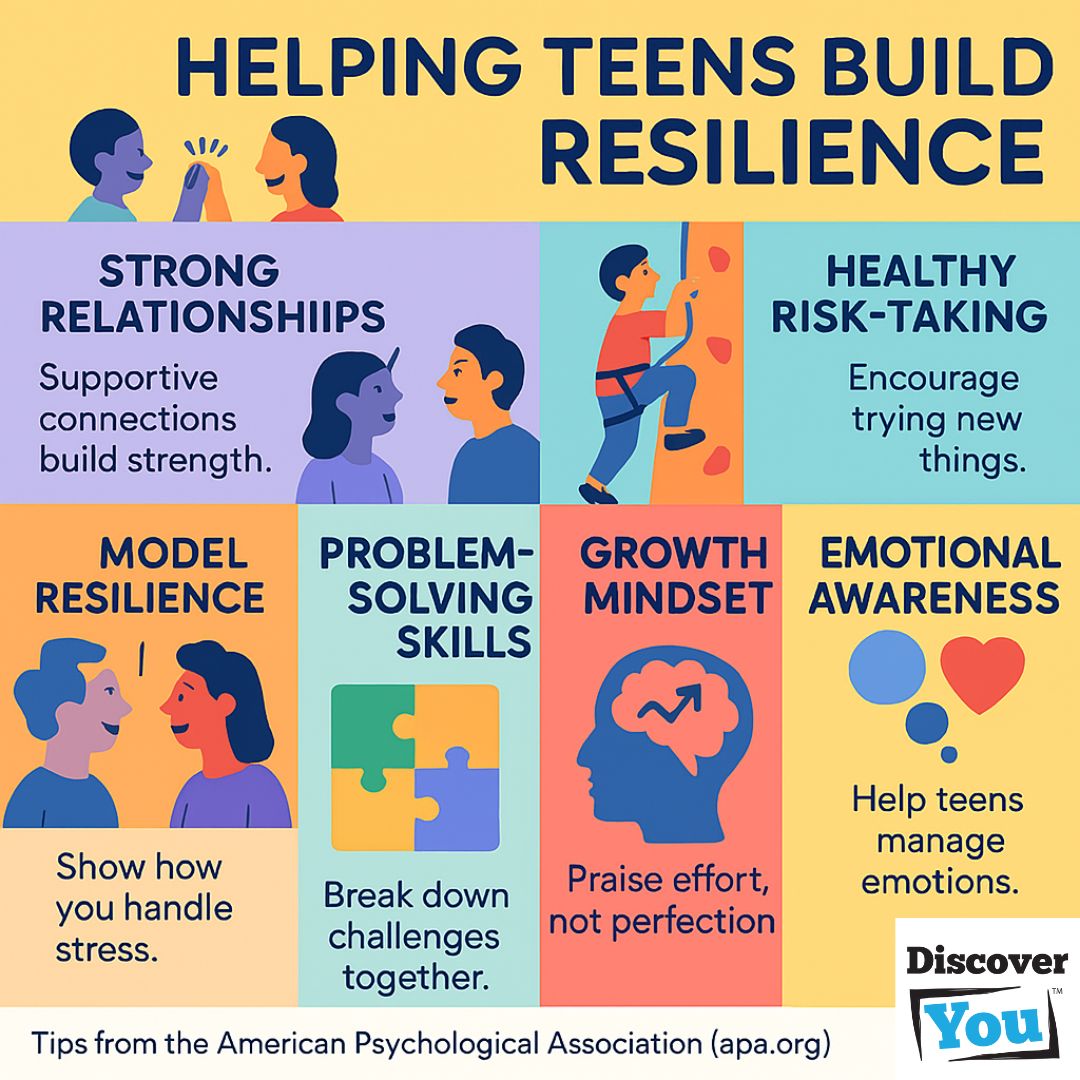
The American Psychological Association offers helpful, evidence-based strategies for adults to help teens to develop resilience and thrive. Here are some ways you can support the teens in your life:
1. Build Strong, Supportive Adult Relationships
Teens need to know they’re not alone. Encourage open communication and be a consistent source of support. Adults can foster this by creating opportunities for youth to share their thoughts and feelings openly without judgement.
2. Encourage Healthy Risk-Taking
Trying new activities, joining clubs, or taking on leadership roles helps teens stretch their comfort zones and build confidence. Celebrate teens for their effort and growth, not just their accomplishments.
3. Model Resilient Behavior
Teens learn a lot by observing adults. Show how you handle stress, setbacks, and change. Talk openly about challenges you face and how you work through them.
4. Promote Problem-Solving and Goal-Setting
Help teens break down big problems into manageable steps. Encourage them to set realistic goals and reflect on what they’ve learned from both successes and failures.
5. Foster a Growth Mindset
Teach teens that abilities and intelligence can grow with effort. Praise persistence and learning rather than perfection.
6. Support Emotional Awareness and Regulation
Help teens identify their emotions and develop healthy coping strategies like journaling, physical activity, or talking to someone they trust.
7. Encourage Meaning and Purpose
Whether through volunteering, creative pursuits, or spiritual practices, finding a sense of purpose can help teens stay grounded and motivated.

Resilience doesn’t mean avoiding stress or hardship. It means learning how to face challenges with strength and adaptability. By creating environments where teens feel safe, supported, and empowered, we can help them build the resilience they need to thrive now and in the future.
For more in-depth guidance on how adults can build resilience in youth, join our online Discover You™ community. There, you will find free and low-cost resources to support the young people in your life, building a future full of hope and resilience.
Recent Comments